Data & AI · Human-Centered Design · Zurich, Switzerland
Sebastian Selman
I work on the gap between what technology can do and what organisations manage to do with it.
That gap is mostly not technical. It shows up as a data platform nobody trusts, a governance model written for a world that no longer exists, or an AI pilot that works beautifully and changes nothing. I spend my time on the organisational side of that problem — currently in enterprise data engineering and data governance, previously across Microsoft's Azure data and AI portfolio, and before that as a design-thinking consultant working with banks and healthcare on how they actually make decisions.
I teach some of this: four years lecturing on digital corporate culture at BVS St. Gallen, and a run of workshops and sessions with universities and fellowship programmes. I co-host a podcast about what happens when enterprises put AI into production, and I write — sometimes about Azure and data architecture, sometimes about borders, personas and why IKEA sells hot dogs.
I grew up in Baden-Baden, was born in Toronto, and started my working life as assistant to a violin maker in Tübingen. Some of that turns out to be more relevant than it sounds.
Now
Talks, workshops, sessions and events I'm attending — what's coming up and what's been.
-
3 November 2026 Session
Same Event, Half the Grind: Event Management with Alibaba Cloud AI
Online — Microsoft Teams webinar
One 1,500-attendee conference run through the full event cycle twice, the way it runs today and the way it runs with AI, with live demos. Co-presented with Nico Bühler of Alibaba Cloud.
-
10 November 2026 Session
SAP Data in Microsoft Fabric: Choosing an Integration Route That Lasts
Online — Microsoft Teams webinar
Every route from SAP into Microsoft Fabric on one map, rated for compliance, cost and readiness. I host; Markus Heinen and Bartosz Kłos make up the panel. One live hour, in English.
-
16 November 2026 Attending
Swiss AI Summit 2026
Kunsthaus Zürich
Previously
-
20–21 October 2026 Attending
St. Galler Produktionsmanagement-Tagung
University of St. Gallen — Hotel Einstein, St. Gallen
This year's theme: “Shaping the Future: The New Rules of Industrial Competitiveness”.
-
9 September 2026 Session
Slaying Dragons with AI
HeadsQuarter Stockerstrasse — “The Artistic”, Zurich
Build your own local AI agent system in the room, then use it on something that matters to you. Bring a laptop and an AI tool that can reach local files.
-
4 September 2026 Workshop
Slaying Dragons with AI — WAVE Fellowship
WeBloom WAVE Fellowship 2026, Zurich
A 90-minute hands-on session for the fellowship cohort: build a working local AI agent system, then point it at a future-self goal-setting exercise. Co-presented with Franziska-J. Klebôn.
-
14 July 2026 Workshop
Slaying Dragons with AI — Berlin Immersion
Tomorrow University of Applied Sciences, Berlin
60 minutes, 40 attendees, four working prototypes by the end of the hour. The write-up is the honest version, including what stopped the other thirty-six.
Projects
What I'm working on beyond client engagements.
-
A conversation series with Dr. Estera Kot, CTO of Clouds on Mars, on what actually happens when enterprises put AI into production. Published on the Clouds on Mars TV channel.
- AI Pilots Are Designed To Pass. Production Is Not A Vacuum 1 October 2026
- The Fabric Toggle That Is GA, Free, And Off By Default 10 September 2026
- Clean The Data Estate First, Or The Agent Guesses 27 August 2026
- AI Is Not Taking Your Job. It Is Promoting You 13 August 2026
- What Happens When the Cloud Goes Down? Smart Buildings, AWS and Resilience 2 July 2026
- What Leaders Need Before AI Readiness: Data Visibility 24 April 2026
-
A hands-on session built with Franziska-J. Klebôn: participants build a working local AI agent system on their own laptop inside an hour, then point it at a future-self goal-setting exercise. Run so far with Tomorrow University in Berlin, and next with the WAVE Fellowship and HeadsQuarter in Zurich.
- Berlin Immersion: 60 minutes, 40 attendees, four working prototypes — and a write-up that is honest about the other thirty-six
- Prerequisites are deliberately low: a laptop and any AI tool that can reach local files
-
Sixteen pieces, from design-thinking essays written as Sebastian Rappen to recent work on Azure AI Foundry, data mesh and where AI investment actually pays. Everything published on limmatreframe.com and LinkedIn now lives here.
Writing
16 pieces, 2019–2026. Everything previously on limmatreframe.com and LinkedIn, in one place.
2026
-
Monitoring and Optimizing a Hybrid Arc-Enabled SQL Server Estate
I spent some time lately thinking about how to properly monitor and mid- to long-term optimize a larger enterprise SQL estate - the following is a condensation of the research done on the…
-
Der 5-Prozent-Filter: Wo im Unternehmen KI-Investment wirklich zählt
Vor knapp zwei Jahren durfte ich an einer Ausgabe der AI Summer School von Microsoft mitwirken und dort einen Impuls dazu setzen, wo im Unternehmen KI-Anwendungsfälle keine, ein bisschen…
-
Slaying Dragons with AI
40 people, 4 working prototypes, and how to be the next one!
2025
-
Establishing a Data Mesh in a Fractal Enterprise: Ensuring Data Quality and establishing Data Contracts
[Disclaimer: The views expressed in this post are my own and do not reflect the views of my employer, hence the thoughts and perspectives shared here are entirely my own and should not be…
-
Azure’s Model Router: Smarter AI, Lower Costs for Your Business
[Disclaimer: The views expressed in this post are my own and do not reflect the views of my employer, hence the thoughts and perspectives shared here are entirely my own and should not be…
-
Azure Databricks and Azure AI Foundry Integration announced at Build 2025
At Microsoft Build 2025, a new integration between Azure Databricks and Azure AI Foundry was announced. Azure Databricks is a unified analytics platform optimised for Microsoft Azure…
-
Integration of Microsoft Fabric and Azure AI Foundry – What, Why, and Who Benefits
The integration, in public preview, of Microsoft Fabric with Azure AI Foundry brings enterprise analytics and generative AI together, answering the key question: “How can we make AI agents…
2021
-
On the value and limits of borders
The central question of this essay was to me: Why will binary systems always only be decideable or complete but never completely decideable? And: What does that mean for me?
2020
-
Getting unstuck, why goal setting does and doesn’t work
Are you stuck? Because you cannot even sort where to start with all the things piling up in your backlog? Or because you are not even sure what shall happen? I came across a white paper and…
-
Remote Collaboration – A framework or tool is nothing if the people behind it don’t benefit from it.
I had the pleasure to meet Rakesh Kasturi, to address some questions that came up on LinkedIn. Centered around remote collaboration, we had the chance to address how to bring people…
-
Heroes, fools and design thinkers meet outside the box
Horos (ancient Greek ὅρος) describes the border, the boundary stone. The human frisson of crossing such a border is stylized in modern horror films. In the movies it is opened up for…
-
Why does IKEA sell hot-dogs?
Have you ever wondered, why they offer hotdogs at the end of an IKEA-trip? The answer is: If they wouldn´t, you would leave the store directly after the emotional all-time-low-moment of the…
2019
-
What is the core of a persona?
A persona is the personified representation of a user or client group. Within design thinking this persona will be centered around coherent need-statements. The persona as method has…
-
Here is a real-life business challenge
If you were to help a small "people´s knowledge center" on the islands of the Ganges delta to reimagine their business-model: What would be your suggestion? Put down your ideas in the…
-
How to avoid Design Thinking B.S.
About a year back, the U.S. Department of Defense published their guide for detecting Agile BS. Within their guide they included a graphic I thought was so inspiring that I re-created it:
-
Grenzen erreichen. Grenzen überwinden.
Horos (altgr. ὅρος) bezeichnet die Grenze, den Grenzstein. Der menschliche Frisson, eine solche zu überschreiten wird in der Moderne in Horrorfilmen stilisiert, gezielt erlebbar gemacht. Wo…
Career
Where the last fifteen years went. Select a band for the detail.
Clouds On Mars
-
Data & Analytics Consulting Lead Switzerland
January 2026 – present
Advising Swiss enterprises on data engineering and data governance, and on the organisational side of putting AI to work.
Microsoft
-
Cloud & AI Platforms Specialist
July 2025 – December 2025
Drove Azure adoption and AI innovation across the territory — modernising infrastructure, unifying data platforms, and scoping cloud-native, analytics and AI workloads with account teams and partners.
-
Data & AI Specialist
May 2021 – June 2025
Worked with global key accounts in staffing, services, cybersecurity and process manufacturing to turn data and AI on Azure into business outcomes — bridging executives, IT leaders and subject-matter experts, and designing enterprise data platforms rather than debating AI in the abstract.
Bildungszentrum BVS St. Gallen
-
Lecturer for Digital Corporate Culture
August 2020 – August 2024
Taught Digital Corporate Culture on the Dipl. Digital Innovation Manager NDS HF programme: how leadership values shift in a digital future, which role models a digital strategy actually needs, and how mission statements survive contact with it.
LimmatReframe
-
Independent Consultant, Human-Centered Design
June 2019 – August 2022
Self-employed work with clients in regulated industries — healthcare and finance — sharpening internal and client-facing value propositions through human-centered design. Built a coaching cycle to measurably improve team agility, and delivered Design Thinking, Lean and Agile training. The essays below come from this period.
EY
-
Content Lead, Design Thinking GSA · Consultant TA CH
July 2018 – May 2019
Led Design Thinking content for EY's advisory practices across Germany, Switzerland and Austria. Lead coach on EY's Innovation Journey, training around a thousand colleagues; co-founded EY's global Design Thinking community. Method lead on transformation programmes including the redesign of a DAX-30 automotive group's corporate finance function.
-
Consultant, EMEIA Financial Services Advisory — Risk
March 2017 – June 2018
Compliance and operational risk for financial services clients: financial PMO for a global insurer's audit co-sourcing, FINMA-compliant regulatory audit of a bank's compliance function, and an operational-risk event recording system built to EBA ITS 2017/01.
-
Intern, EMEIA Financial Services Advisory — Risk
November 2016 – February 2017
Supported the regulatory audit of a Swiss bank's compliance function and a new target operating model for a Swiss private bank's risk function.
University of St.Gallen
-
Student Assistant, Institute for Business Ethics
August 2016 – October 2016
Helped build an executive programme on corporate social responsibility.
-
Research Assistant, Institute of Technology Management
March 2015 – October 2015
Literature analysis, qualitative and quantitative research design, and editing articles for journal review alongside professors and doctoral students.
-
Working Student, Institute for Systemic Management and Public Governance
January 2015 – March 2016
Luthier Almut Schubert
-
Luthier's Assistant
September 2011 – April 2014
Assistant to the violin maker Almut Schubert: setting up and dismantling instruments, preparing them to be played, and handling minor repairs. Later ran my own repair customers and reorganised the workshop's stock and order process.
Reading
There are books worth sifting through, and there are books worth re-reading again and again. These are the ones I keep coming back to.
As complexity rises, precise statements lose meaning and meaningful statements lose precision.
Lotfi Zadeh
Essays
-
Maker's Schedule, Manager's SchedulePaul Graham
Why a single meeting dropped into the middle of an afternoon can cost a maker the whole afternoon, while costing the manager who booked it an hour. The clearest short account I know of why calendars and deep work pull against each other.
Books
-
Skin in the GameTaleb
On the ethical implications of risk taking and risk distribution relative to decisionmaking. As part of Nassim Nicholas Taleb’s “Incerto Series” it is written not to be summarized, but to be read.
-
AntifragileTaleb
Fragile stuff breaks, when exposed to volatility. Robust stuff doesn´t care aboutvolatility in it´s environment. Antifragile stuff gains (what?) from volatility. The thoughtsTaleb presents here under the heading of barbell-strategies are seminal to mythoughts about innovation management and long term strategies, potentiallyproviding an answer to Christensen´s Innovator´s Dilemma.It is an essayistic collection of reflections and observations on randomness & volatility- and definitely one of my favourite books.
-
The Innovator´s DilemmaChristensen
Based on the work and research done for his PHD, Christensen sheds light on whylarge companies are hesitant to pursue options in what Taleb (above: Antifragile)would call the fat tails. By studying e.g. Kodak´s demise this book illustrates, howdisruptive innovation as a phenomenon might come into being and why it is sodifficult for incumbents to fight it off.
-
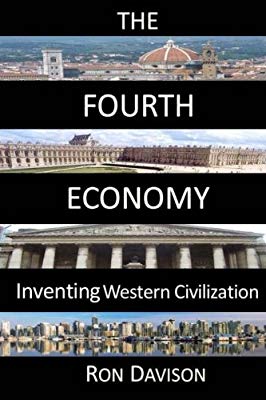
The fourth economyDavison
This book was initially published purely as e-book. After going somewhat viral withincertain circles, it is now aswell available as paperback. It is a very long story,illustrated beautifully by carefully researched examples all along – the basicproposition made within this book is fundamental to my conviction, that the ability todeal with complex problems will be seminal to the success of people andorganizations within the 21st century.
-
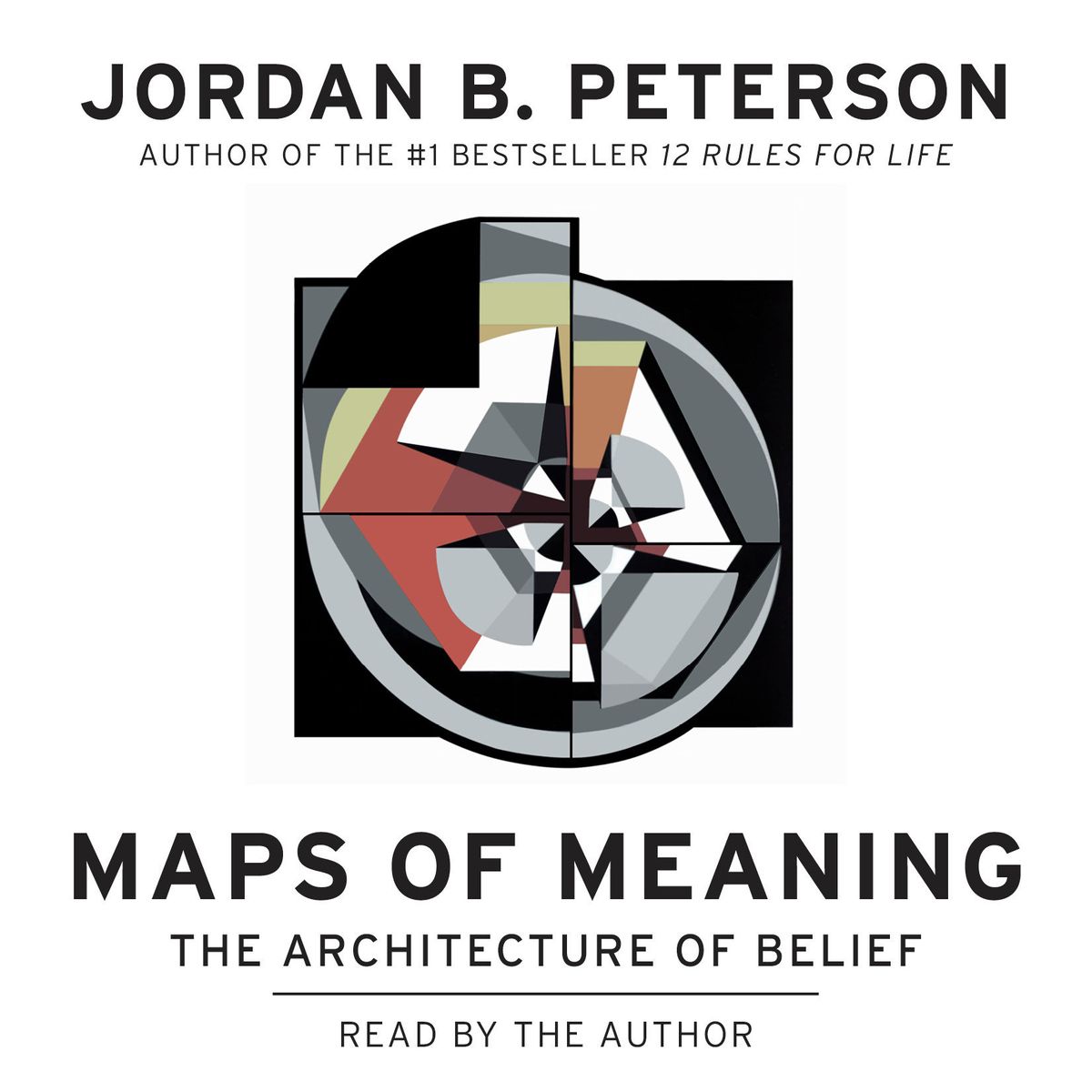
Maps of MeaningPeterson
How did humanity end up waging unseen wars against one another in the 20thcentury? It is this question that initially got Jordan Peterson thinking and wrtitingabout what came to be “Maps of Meaning” and probably one of the most clickedlectures shared online at the University of Toronto. To me it is a cautionary taleagainst violence and on how humans orient themselves within reality derived fromthe close observation of many civilizations’ tales and myths.
-
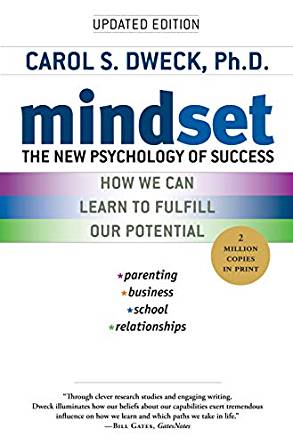
MindsetDweck
Why would you praise people for what they have achieved? Why would you praise them even if they haven´t achieved what they were aiming for? Based on the research for her PHD Carol Dweck writes a story on the effects of subtle differences in communication that has changed how I converse (with family, friends and in the professional sphere). If I could only give a single book to people as gift for the remainder of my life: I´d pick this one for all of them.
-

Miteinander RedenSchulz von Thun
Schulz von Thun elaborates over 3 volumes on how we might (mis-)understand what others (are trying to) tell us. This book helped me to differentiate between the factual content and perceived offensiveness of feedback and critique. Together with phenomenological writings from French 20th century philosophy it fundamentally changed how I conceptualize reality.
-
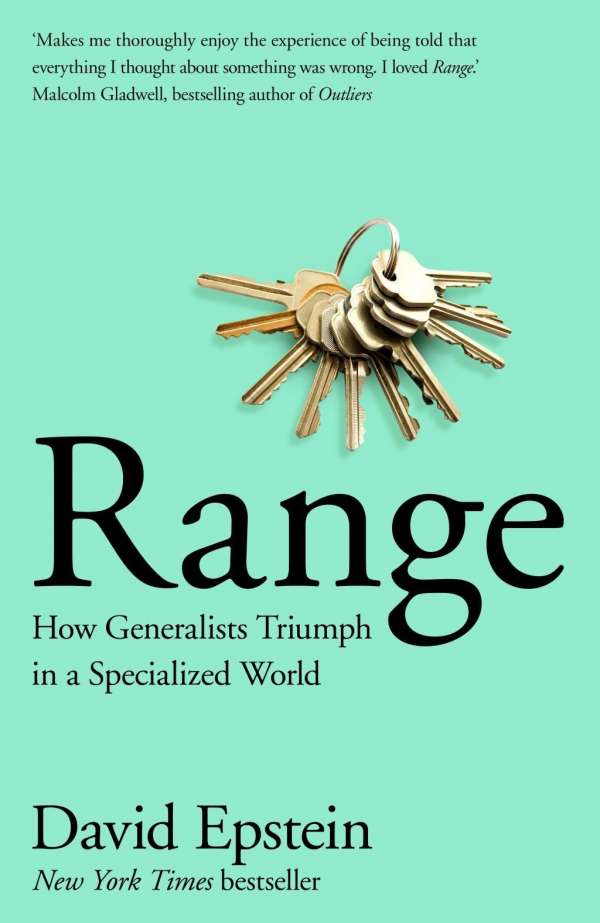
RangeEpstein
On the question whether hyperspecialization is a reasonable strategy for coping with a complex world. It probably is within tame learning environments, and that is howthe 10´000 hour rule gained its internet-fame – it, probably, is not for those learning to dance with ambiguity.
-
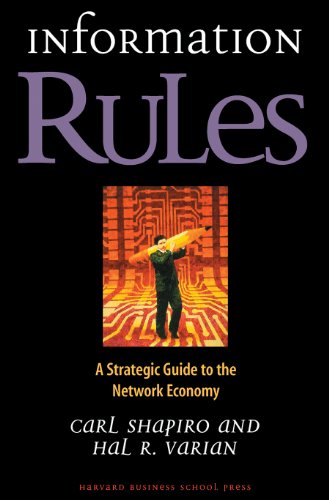
Information RulesShapiro & Varian
Platform Business-Models are ubiquituous nowadays – here is a brilliantly principled disection of their mechanics relative to information technology written towards the end of the last millenium – timeless in its content! If you ever want to do something that ends up producing money in the www – you should read this book. If you want to understand why certain players (google, twitter, facebook) have become so powerfull – read this (or turn to Nir Eyal).
-
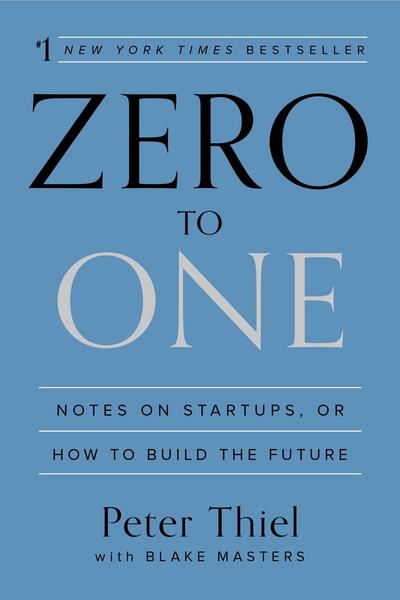
Zero to OneThiel
Thiel as part of the “pay-pall mafia” reflects on the difference between autochthonous new value propositions and copy cats in all of their different forms of appearance.I beg your pardon for the comparison, yet: Probably due to Thiel´s experience reading this book was to me as if one switched from a bird’s eye view to ego-shooter mode in one of the good old computer games: You observe the same events, but the relevance for yourself becomes much more tangible. In this case, thankfully, what you observe is the creation of value and not the destruction thereof.
-
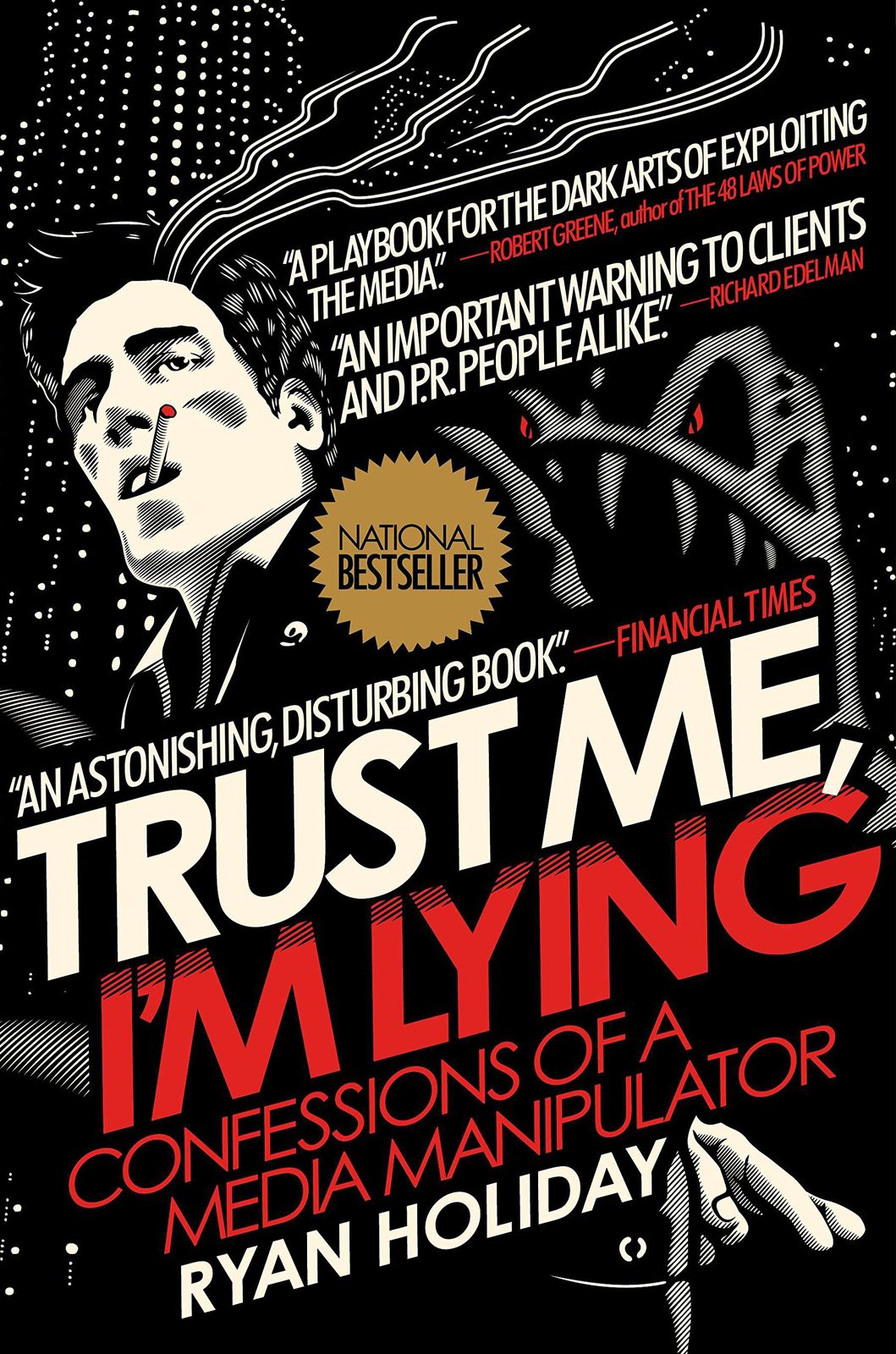
Trust Me I’m LyingHoliday
People ask me why I refuse to read newspapers. It’s partly because I’ve read this book (and the above mentioned by Nassim Nicholas Taleb). It is very helpful to understand how blogging, twittering, and “news” work. And it hints at a possible explanation for why certain topics I would consider interesting will never be headline.
-

Tübinger Einleitung in die PhilosphieBloch
I love to recommend this book. Sadly there is no english translation available (yet), however his essays on the philosophy of Music are beautiful and the book “traces”is one I like to read single sections of every now and then, and they may be an entrance to his thoughts for the English reader. Bloch’s introduction to philosophy brings his version of concrete utopianism and his thoughts on hope into context with philosophies long tradition.
-
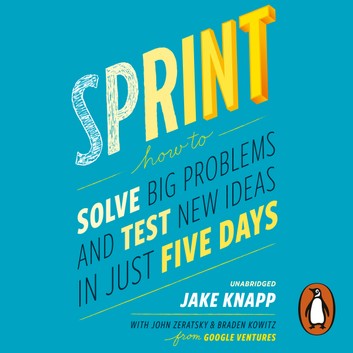
SprintKnapp
What Jake Knapp put into writing here literally went viral amongst the workshoppers & design thinkers. People focused on product and service design alike have turned to this book again and again to structure their sessions and get some inspiration. What was born as the google venture sprint now is being re-invented and re-issued under thousands of different names.
-
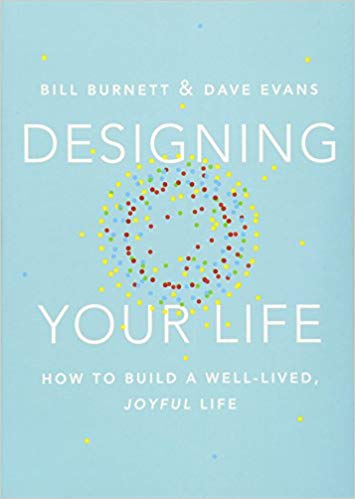
Designing Your LifeBurnett & Evans
Based on the learnings of what some claim to be the most successful course being taught at Stanford, Bill Burnet & Dave Evans present their answers to the question of “How to build a well-lived joyful life”. It is a very practical and actionable volume full of smart and proven ideas on how to “optimize” – it does not provide answers to the question of what is worth being optimized, if the latter question is of more interest to you, I suggest going to Peterson instead.
-
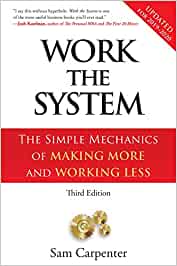
Work the SystemCarpenter
Sam Carpenter describes his “down-trotten-life” prior to reframing what he was doing from “checking of to-do’s” to “working-the-system”. He advocates building systems you can rely on instead of only being the fire brigade in your life that attends to whatever is currently crying for attention the loudest. Goes well with David Allen’s book “Getting Things Done” (below).
-
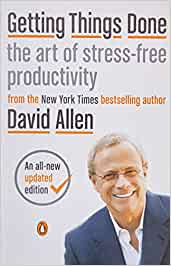
Getting things doneAllen
When the above books greatly argue on the meta level about how important it is to build systems you can rely on, this is the proven step-by-step guide to implementing it. The book I talkes about paper-based-filing-systems, but do not let this distract you, the system you need and want to build will be exactly the same if you use apps or slack-channels or whatever your preferred tool for getting things done may currently be.
-
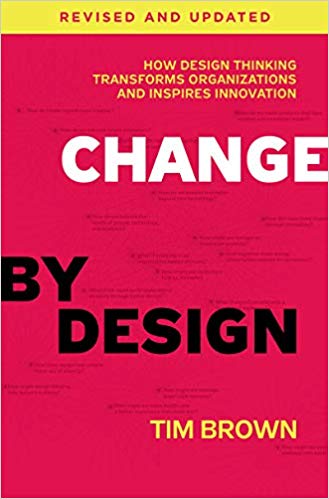
Change by designBrown
The basics of Design Thinking in practice layed out clearly by one of the founding fathers of Design Thinking as an explicitly described method. This book showcases how Design Thinking can change organizations. If you are more into the practical guidlines and want to change your very personal circumstances, refer to “Designing your Life“.
-
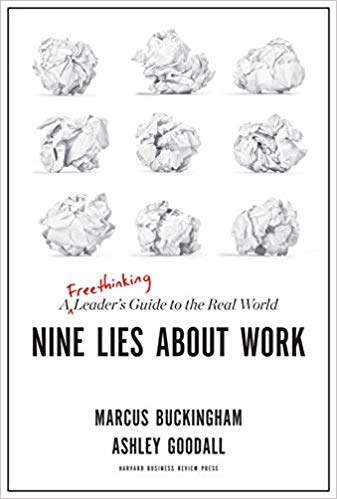
Nine Lies About WorkBuckingham & Goodall
A beautiful book, that is especially enjoyable to read, because the single lies it uncovers (9 of them, as you correctly guessed) are very well rounded stories and chapters of their own. It does go against the grain of common misconceptions – or at least points out the important exceptions to what appears to be rules according to common wisdom. Get ready for 9 powerful reframes, that will change how you think about work.
-
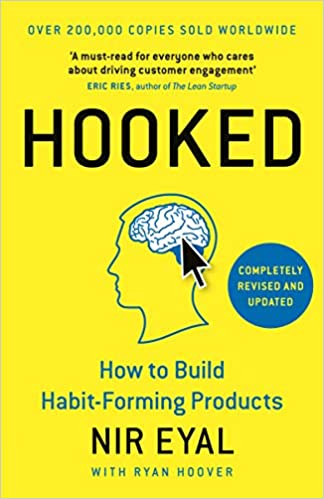
HookedEyal
Nir Eyal’s book “Hooked” carefully disects how Facebook, LinkedIn and co are able to lure us onto their platform yet again and again. The hook-model he presents and illustrates allows you not only to understand how social platforms are tuning into your brain’s way of establishing habits but – in reverse – also is insightful if you yourself are aiming to create a habit forming product yourself. It does however not clearly provide an antidote to this cycle. For this you’d need to turn to the volume mentioned below: “Indistractable“.
-
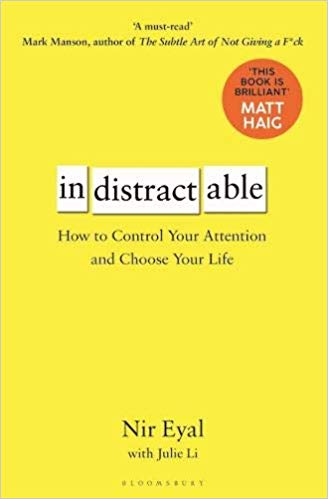
IndistractableEyal
With increasing distractions being described precisely at book length – the power not to be distracted seems to become a superpower. After initially describing how digital products actually create their habit-forming-powers (see “Hooked” above) this book is the antidote: How to keep yourself focused on whatever you deem to be relevant and worth your time & effort.
Certifications
Certifications and badges issued through Credly, newest first. Each one links to its Credly page, where it can be verified.
-
Generative AI Leader Certification
-
Cloud Digital Leader Certification
-
Microsoft Global Hackathon 2025
-
Data & AI for Sustainable Business Transformation Badge
-
Akkodis AI Hackathon: Challenge Completed
-
Microsoft AI Navigator [Azure]
-
Microsoft Certified: Security, Compliance, and Identity Fundamentals
-
Microsoft Certified: Azure Fundamentals
-
Microsoft Global Hackathon 2022
-
Microsoft Certified: Azure Data Fundamentals
-
Microsoft Certified: Azure AI Fundamentals
![Microsoft AI Navigator [Azure]](/assets/img/credly/microsoft-ai-navigator-azure.png)